
DEDICATED TO PRESERVATION, RESTORATION & REVITALIZATION OF THE MOSHASSUCK RIVER
Your Bird Story Podcast Episode
(click to listen on Spotify)
Greg Gerritt for PVDeye January 3 2024
The name Moshassuck means "where the moose drink" in reference to the wide flood plains that were pockmarked with the small wetlands filled with the vegetation moose love to eat. Moose would find not Rhode Island particularly hospitable today, due to the draining of the wetlands and the rising temperatures of the current pollution-induced climate catastrophe that allow moose parasites to thrive, but during the Little Ice Age (1300AD to 1850AD) this was moose country.
The Moshassuck River has been dammed and polluted at least since 1675 and probably even earlier, making pollution history among the longest in what is now the USA. It is a small river, less than ten miles long, running from the Limerock section of Lincoln to the tidewater in Providence where it joins with the Woonasquatucket River to form the Great Salt or as it is currently known, the Providence River. In addition to being short, it is narrow and has a watershed of only twenty three square miles. Small as it is, along the banks of the lower Moshassuck is where Roger Williams founded the first settler colony in Rhode Island, near a spring below what is now College Hill. From its very beginnings in that colony, the Moshassuck was used as a sewer, with human excrement pouring in from houses along the river and nearby.
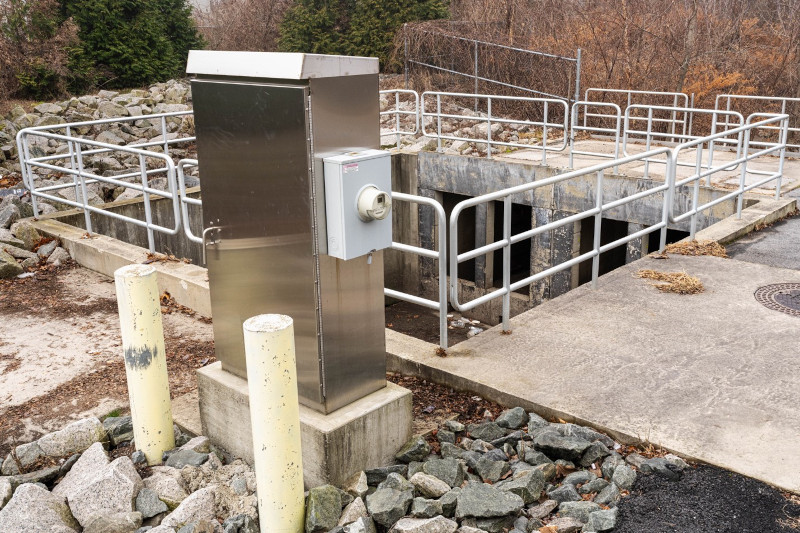
The estuary where the Moshassuck River reaches the sea in what is now downtown Providence was once an incredibly rich ecosystem with abundant fish, shellfish, and birds. But as Providence grew up around it, every sort of pollution poured into the Moshassuck. At its heyday in the industrial revolution, around the turn of the twentieth century, more than a hundred mills lined its banks pouring out dyes from textile mills, as well as chemicals and heavy metals from industrial plants making machinery. At least seven dams were built along the river, the tallest at Barney Pond in Lincoln, at the edge of what is now Lincoln Woods State Park.
Turning the lower five miles of the Mosassuck into a canal, from southern Lincoln to the tidewater, in 1829, only added to the damage to the river. The Blackstone canal, running from Worcester to Providence until the railroads put it out of business in 1846, cut through the lower Moshassuck instead of along the Blackstone River to Pawtucket. This route was chosen because the lower Blackstone has so many larger waterfalls it was impossible to put a canal through with the construction technology of the time, and because there was not enough water in the system to manage the locks needed to raise and lower the barges that the steep falls would have required.
With the coming of the railroad, the closing of the canal meant that there was more water available to run the mills, and starting in 1847, as new mills were built, new mill housing sprang up along the Moshassuck. The industrial pollution and the volume of household sewage in the river increased dramatically, and what little life left in the lower river almost disappeared. By the 1920’s, some of the communities had built sewage treatment plants, and the mills started closing, but the water quality was still so bad that almost no one got close to the lower river, and almost all the construction was designed to face away from the river in an attempt to wall it off. In fact, the lower Moshassuck was the site of several cholera outbreaks in the nineteenth century, until the building of the Fields Point sewage treatment pushed the pollution further down the Bay.
The Clean Water Act of the early 1970’s was finally the first glimmer of hope for the lower Moshassuck since the 1600s, but even the passage of legislation did not change much at first. Eventually the industrial pollution was much reduced, and the towns now have better sewage treatment plants, but here again history has a grip: the old sewer systems still combine rainwater and sewage, and when there’s heavy rain, some raw sewage still flows into the river.
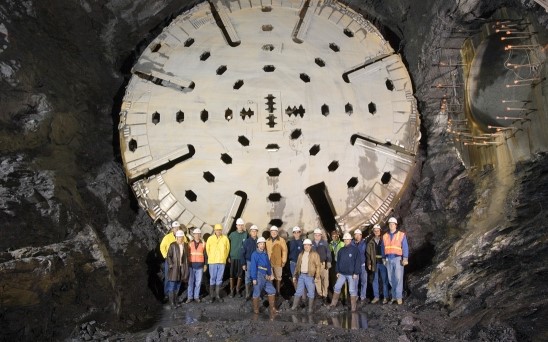
The dawn of the twenty-first century brought significant change when the EPA mandated that Rhode Island address combined overflow sewage. A billion dollar Combined Sewage Overflow project was begun so that the rainy day sewage can be captured and treated at the sewage treatment plants instead of running into the rivers. Phase One and Phase Two are now completed. But alas, it is going to take Phase Three to capture the raw sewage that continues to flow into the Moshassuck River, and while that phase has started, it will be at least two more years before completion.
Phase Three includes building a 3 mile tunnel from the Moshassuck River right on the border between Pawtucket and Providence all the way under Pawtucket to the Bucklin Point Sewage Treatment Plant in East Providence. When this work is finally done, more than 90% of the rainwater and sewage that flows into the upper Moshassuck will be captured and treated. The lower Moshassuck should become much cleaner. The river will not be swimmable or fishable, as the Clean Water Act specifies, but it will be much less dangerous to the community and much more amenable to the creatures that rely on the river. We can only hope that in 2025, when the project is complete, the restoration of the Moshassuck can begin and the lower-income communities along the lower river will start to see the benefits that have already come to other areas that the Narragansett Bay Commission sewage system covers.
Rainwater Pool Provides Vital Amphibian Habitat at Providence's North Burial Ground
Rhode Island Green Infrastructure Coalition October 2020 Newsletter
About ten years ago, Greg Gerritt, the watershed steward for Friends of the Moshassuck found a population of Fowler’s Toad tadpoles in a small rainwater fed wetland in Providence’s North Burial Ground. He has watched, studied, and filmed them ever since in an effort to understand the ecosystem of the rainwater pool and the creatures that inhabit it.
Years of study and observation led to an understanding that the pool collected all of the stormwater runoff from the area and that it held water for 3 weeks. It would continue to stay relatively full if each week it received at least .9 inches of rain in no more than 2 storms. It takes nearly a half inch of rain to work through the obstacles and runoff into the pool.
The vegetation at the pool is changing rapidly, with cattails squeezing out nearly everything else and the pool is rapidly filling in with silt carried in from the watershed during storms. Research also showed that this was probably the only population of Fowler’s toads in the city with no records of Fowler’s Toads anywhere in the city in the last 100 years.
Amphibians are the most endangered taxa among the vertebrates, with extinctions rampant. Many amphibians are dependent upon wetlands, which are also endangered. The goal of the Green Infrastructure Coalition (of which Friends of the Moshassuck is a member) is to clean stormwater before it reaches critical parts of the ecosystem, so it made sense to try to use the cleaner water to restore and enhance the amphibian habitat.
The Rainwater Pool became a study site and eventually a restoration site, in which it was proposed that the center of the pool be deepened to provide a few additional days before the pool went dry in a dry breeding season.
In 2018, Friends of the Moshassuck did a small excavation deepening the pool about 6 inches over a 10’ x 25’ area in the center - in partnership with the Providence Parks Department and with a permit from the RIDEM.
2020 has been a dry year, as of September much of New England, and Rhode Island, have been declared to be in drought, and in fact the rainwater pool has been dry most of the summer, and for the first time since the study began, absolutely no tadpoles turned into little toads and hopped away. But as 2020 was the first drought since the pool had been deepened, it was the first time we could observe how well it worked. It is one of those situations in which you can say the operation was a success - but the patient died.
The pool does now hold water for an additional 4 days as predicted, and twice this year the extra water preserved tadpoles through a few days beyond when they would have survived. However, eventually the pool went completely dry and all of the tadpoles perished.
There are very limited sites in RI where it would be appropriate to enhance or create amphibian habitat while managing stormwater. It takes a special site, but the work FOTM did on the topic has influenced people working with spadefoot toads to create habitat, though not in places where it is part of stormwater management.
Friends of the Moshassuck has a YouTube channel, MoshassuckCritters, which documented the entire process and project.
Please check it out to learn about these tadpoles and other critters!
Participating in Rhode Island Rivers Water Testing
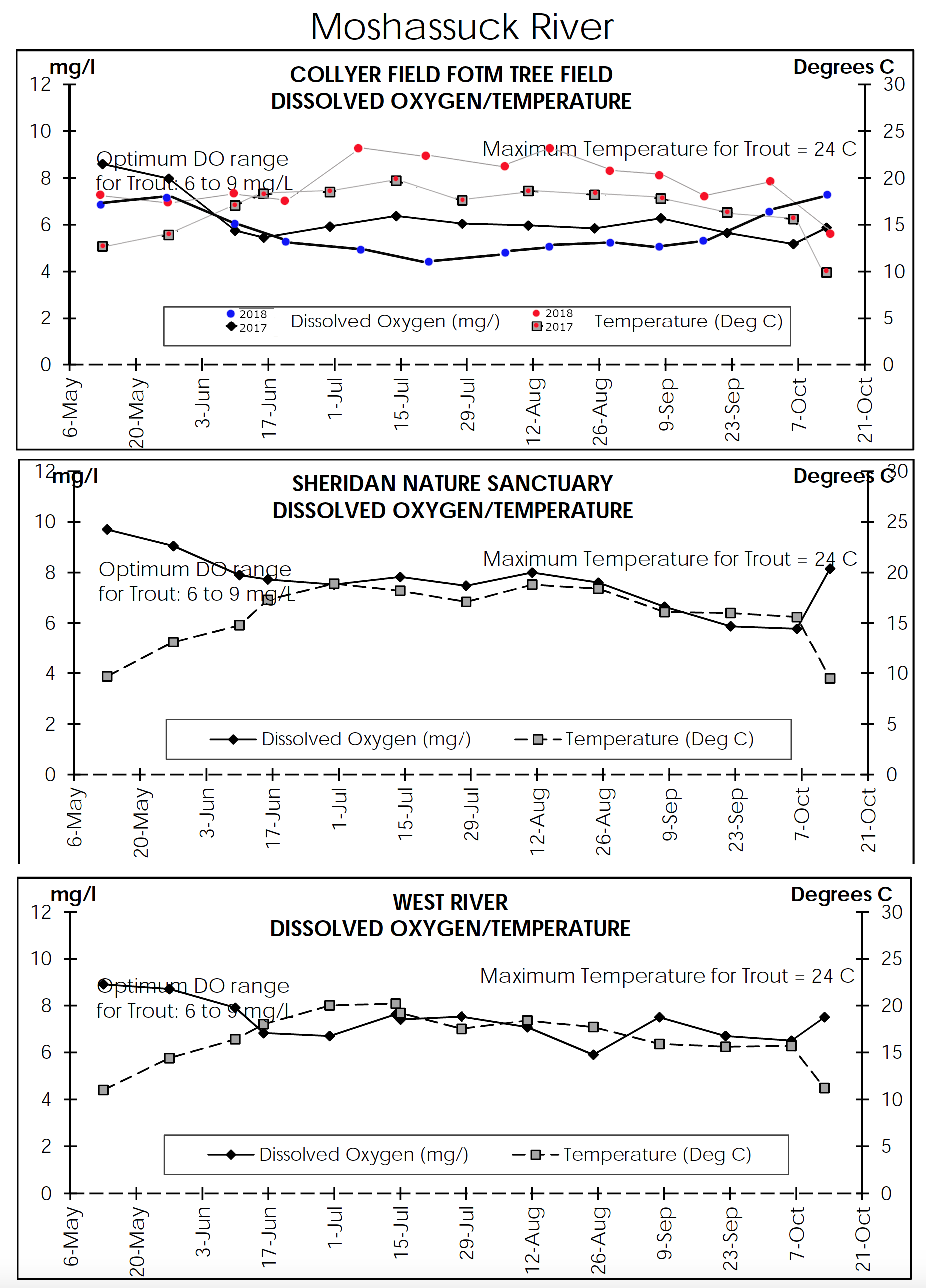
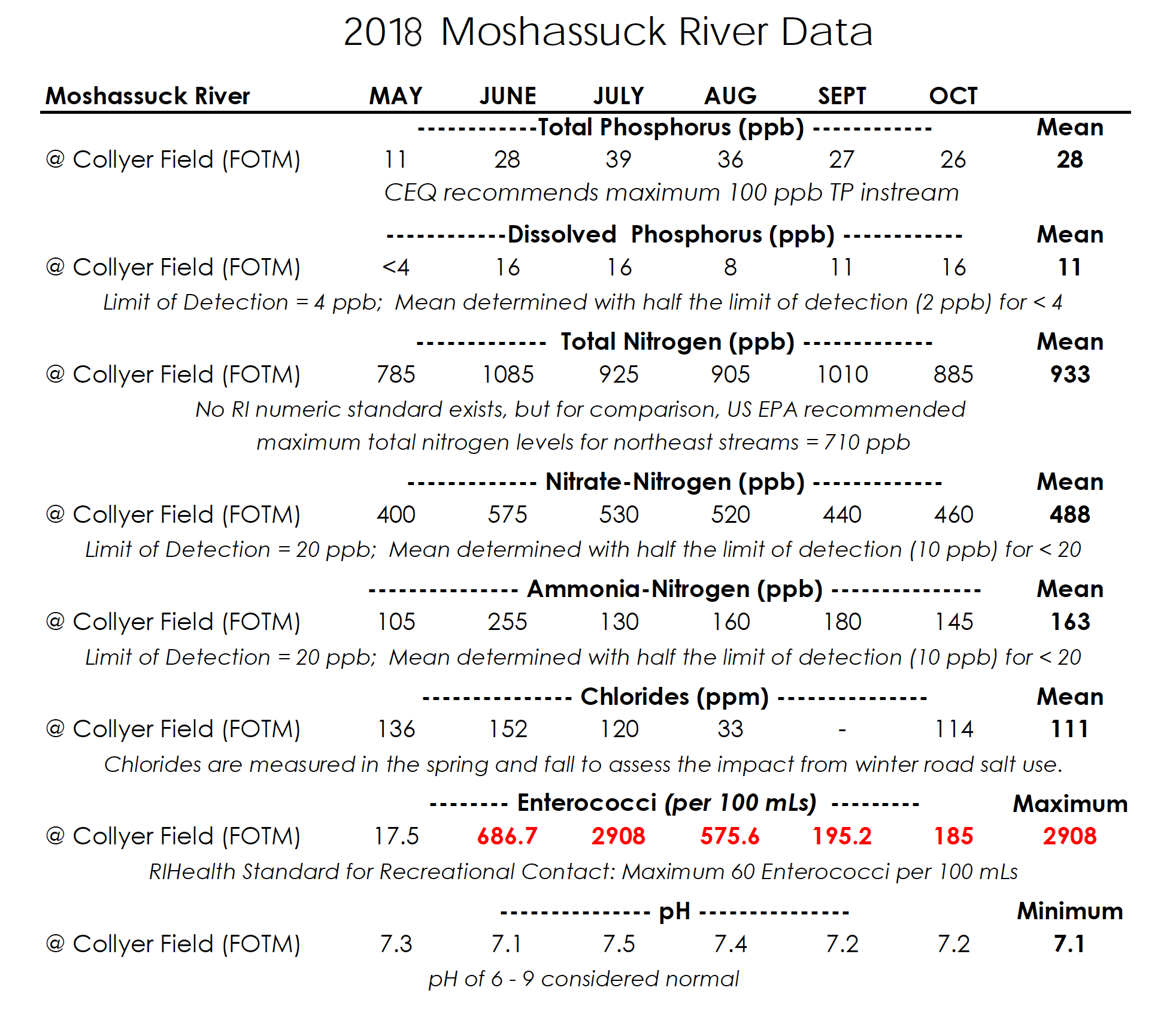
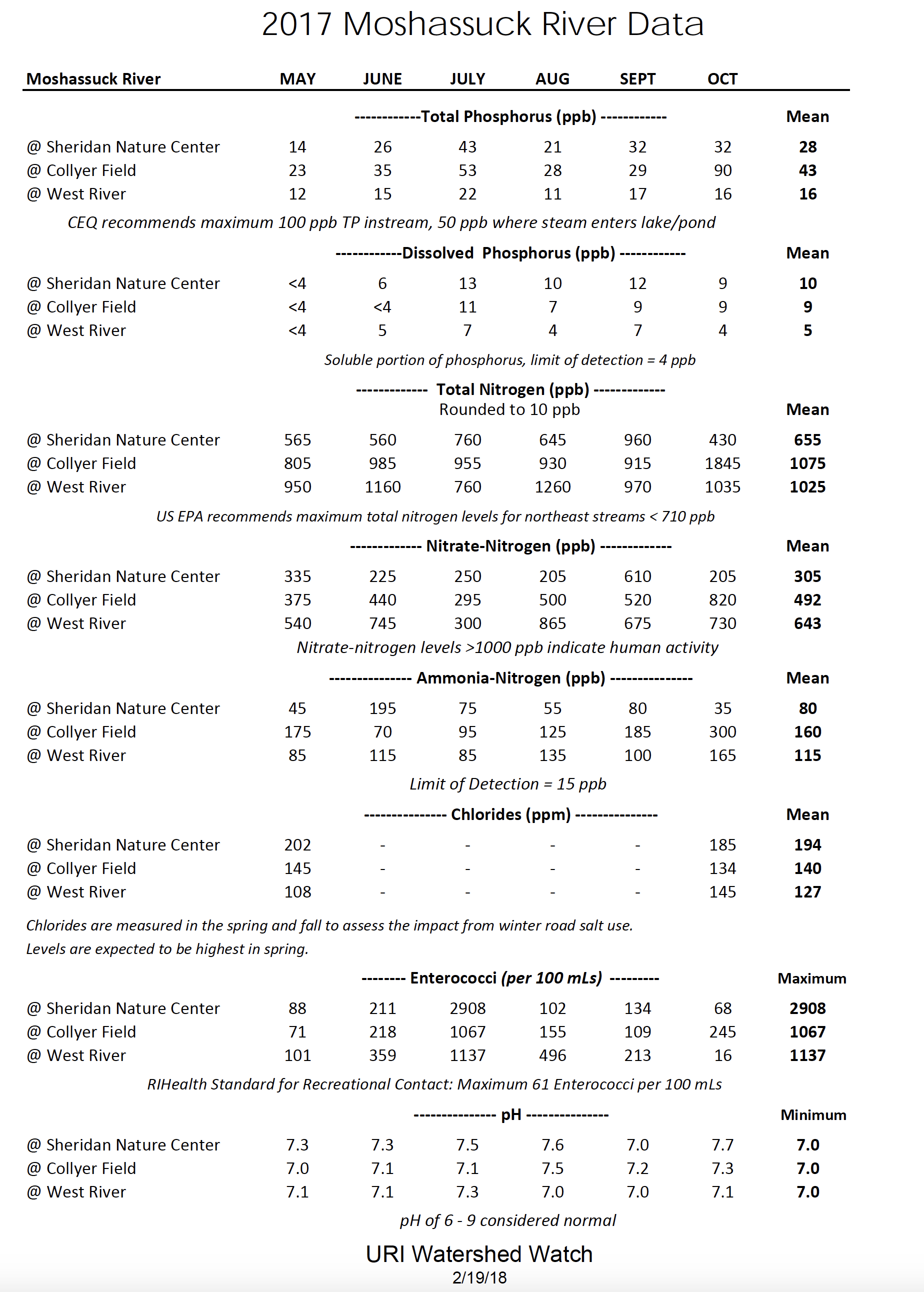
Sometimes data tells a story. FOTM participated in the annual URI Watershed Watch river water quality testing program in 2017 and 2018. The data gave us a good sense of the health of the river for fish and we will participate again in the future to compare with the baseline results below...
Greg Gerritt's Submission to the RIDEM Wetlands Restoration Team
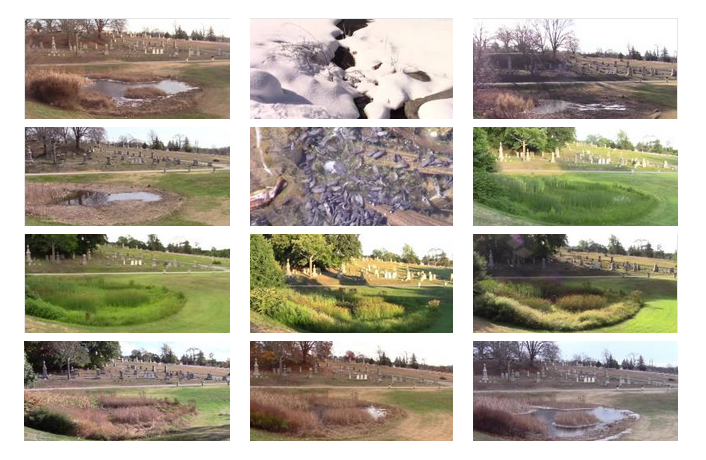
The North Burial Ground a 300 year old cemetery along North Main Street in Providence has a small wetland that is fed entirely by the runoff coming from a small watershed that funnels water down 3 roads to the rainwater pool. The pool is in an area that would have been originally part of the wetlands lining the Moshassuck River, but between 300+ years of civilization, and the reshaping the area due to the Blackstone Canal and I-95, the river runs underground, and it is hard to say what is natural and what is not. I have been told that in the past the pond was deeper, more permanent, and had a fountain. The 2016 Rainwater pool video series provides detailed pictures of the site, but I am including aerial photos from google as well as screen shots from videos showing the pond. Currently the pool is completely dependent upon rainwater and the pond levels go up and down pretty consistently with the rains.
I was first attracted to the pool in 2011 when I noticed black tadpoles one spring day. In 2013 the Moshassuckcritters video project of Friends of the Moshassuck started documenting the tadpoles and other NBG wildlife. As I spent more time at the pool and watched it change across the seasons and years, I came to understand the pond as a rainwater system, and studied how the Fowler’s Toads and Gray Tree Frogs interacted with the pond.
The rainwater pool in the NBG is approximately 100 ft from east to west and 60 ft from north to south. The grass is mowed right to the edge of the wetland around most of the pond, with a steep sided section on the north covered in knotweed and vines. The pool is closely abutted on 2 sides by cemetery roads. To the south and west the land rises to the cemetery sand piles and a dirt road providing access to the piles off the route to the main gate. Land management practices around the pond create some erosion, but the dirt road, with its delta reaching on to the tarred road, is the source of most of the silt going into the pool, as silt deposits can be seen all the way from the delta to the pond. It seems like the pond has become shallower and vegetation has taken over more of the bottom of the pond recently.
Recent data suggests strongly that amphibian populations in New England are very dependent upon how long the hydroperiods are of ponds that do go dry and therefore have no fish. I believe that the shallowing of the rainwater pool is reducing its hydroperiod. Over the last few years I have watched the pond go dry with tadpoles in it, and then seen the toads and frogs try again when the rains returned. With a hydroperiod of between 12 and 14 days, and the need to have about an inch of rain each week to maintain water levels, it seems that if the hydroperiod could be extended by 4 to 7 days for a full pond, that it might provide for a much higher percentage of years in which breeding is successful and little toads and tree frogs hop away from the rainwater pool during the summer.
Amphibians
Amphibians, with the need for multiple habitats to complete their life cycles, are vulnerable, and even more vulnerable in civilization and during climate change. Amphibian populations and species are disappearing faster than any other large groups of species on the planet right now. The populations using the rainwater pool for breeding are the only Fowler’s Toad and Gray Tree Frog breeders noted in Providence for 100 years. I know of no other populations, though I know a variety of other amphibian species live in the city. Unlike some of the most vulnerable amphibians, Fowler’s Toads breed over a lengthy breeding season whenever conditions are right, and have further resilience in that they can have a breeding cycle interrupted by several dry weeks and start up again when the rains return. Gray Tree Frogs also breed at the pool over an extended season, but treefrog tadpoles are rarely seen, and only one year have I seen numerous shiny little green frogs come out of the pond. I know less of the conditions necessary for tree frogs, but at least one thing is clear. The pool needs to hold water longer for tree frogs to metamorphose as they mature a bit slower.
The rainwater pool is silting in, reducing the hydroperiod and increasing the odds that the amphibians using the pool will be unable to complete their life cycles. We propose a simple intervention that places essentially no risk on the amphibians using the pond by working on the pond in the off season and doing relatively small amounts of work in a way that simply lengthens the hydroperiod a bit by deepening the pool and possibly lining it so that it holds water better.
The work
The work entails removing 8 to 12 inches of silt from the deepest part of the pool, and smoothly tapering off until at the current edge of the pond the depth remains the same. We shall cut the cattails back about 5 feet and in the course of removing a few inches of sediment in the western part of the pond remove some of the pickerel weed. There is still some discussion among my collaborators as to how wide a swath should be included in the deepening of the western part of the pool. Several other plants with patchy distributions reside in that area. The cattails, pickerel weed, and other plants should return on their own as none of their patches will be completely removed.
No other vertebrates use the rainwater pool regularly, with ducks using it when it is very high and leaving as soon as it shrinks, though there are a variety of insects that use it as well as microscopic pond fauna. Doing the work in the off season, and only when the pool has gone dry will prevent most harm to the fauna.
There are some things that would be very good to know before moving any dirt. The first is a need to actually look at the soils in the bottom of the pool and understand their water holding capacity. It has been suggested to me that it is likely the soils are rather sandy, after all it is a burial ground, places chosen due to droughty soils that made for poor agriculture but easy digging. That might mean adding something to the bottom of the pool once the extra silt is removed, either a layer of clay or some sort of liner. First step is to get a professional to look at the soils.
The way the work could be done is with a crew of volunteers with shovels, possibly supplemented by something on the order of a bobcat for removal of cattails, and we are not removing much soil, probably an area of 30 by 50 and no more than a foot deep at the most, and much less most places as it slopes to the current shoreline.
About two inches of the top layer of pond bottom should be removed and kept separately. When done this should be returned to the pond to seed flora and fauna. If the soil has sufficient water holding capacity, then simply deepening the deepest hole by 8 to 12 inches and sloping it smoothly to the shoreline will be sufficient. If the soils are not tight enough, it will mean digging a bit deeper to put in some sort of impermeable layer and then backfilling to a depth 8 to 12 inches deeper than the current situation.
Friends of the Moshassuck is a regular partner with the City of Providence Parks Department on this and other sites in the watershed. The city is most willing to let FOTM do this project and believes that the project should simply be considered routine maintenance of rainwater infrastructure. It is likely that the actual work will be done by a crew of volunteers with shovels and wheelbarrows, though we are not currently ruling out using small motorized digging machinery to remove the cattails.
It has also been suggested that some sort of silt filter be installed where the rainwater funnels into the pool basin in the northeast corner. That is a project for another year.
By FRANK CARINI/ecoRI staff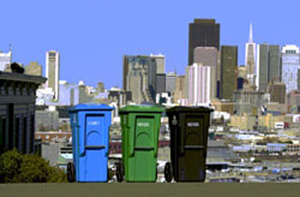 San Francisco has instituted a mandatory three-bin system for the collection of trash, recyclables and compostables.There’s a movement afoot to bring curbside composting to Rhode Island.
The Providence Urban Agriculture Task Force and the Environment Council of Rhode Island were awarded a U.S. Department of Agriculture (USDA) grant to find out how to remove food waste from the Ocean State’s trash stream and use it to create organic soil rich in nutrients.
Greg Gerritt, a member of the Environment Council of Rhode Island and a vocal environmentalist, is spearheading the effort. The Providence resident has spoken to dozens of people about the idea in hopes of developing a plan that meets the needs of municipalities, farmers and gardeners, among others.
Gerritt has organized an invitation-only meeting for Jan. 15 at The Rhode Island Foundation, in which stakeholders will exchange ideas about curbside composting and the various facilities that would be needed to support it — from an agricultural model to an industrial model to the use of greenhouses.
The meeting will include lawmakers and representatives from various Rhode Island cities and towns, restaurants, local colleges and universities, waste haulers and the Rhode Island Resource Recovery Corporation.
“We want to see who is really interested and who might have resources to bring to the table,” Gerritt said. “Back when I began looking at this issue, I thought the hard part would be to develop a collection system. I now believe that is totally doable, and now I believe the key factor will be to determine what type of facility or facilities to develop and then figure out how to find the money, find the partners, find the investors.”
Compost is a mixture of decaying organic matter, such as potato skins, coffee grounds, carrot peelings and apple cores, used to improve soil structure and provide nutrients. Unfortunately, most of Rhode Island’s valuable food waste ends up buried in the ever-shrinking Central Landfill.
The USDA estimates that nearly 26 million tons of annual food waste ends up rotting in landfills or being burned in incinerators. Food waste that doesn’t end up buried or burned, is chewed up in garbage disposals, which increases the load on sewage treatment plants, wastes water and keeps more nutrient-rich food scraps from being used as fertilizer.
In fact, less than 2 percent of U.S. food waste is managed through composting, according to the federal agency.
“The Urban Agriculture Task Force does not have the ability to transform the management of waste in Rhode Island on its own,” Gerritt said. “The only way this transformation is possible is if all of the potential partners, all of the organizations that deal with our waste stream, realize composting is in the best interest of the community and economically feasible.”
Amelia Rose, lead organizer for the Environmental Justice League of Rhode Island, said it is imperative that “we reduce the waste burden in Providence and throughout Rhode Island.”
She mentioned composting and recycling as the best ways to reduce the amount of waste unnecessarily being dumped at the state landfill in Johnston. “Structures are in place that encourage waste,” Rose said. “If we make recycling easier, make composting easier, people will do it.”
The organic matter that Americans discard daily, including food scraps, yard trimmings and other biodegradable garbage, comprises 23 percent of the U.S. waste stream, according Mike O’Connell, the executive director of the Rhode Island Resource Recovery Corporation, which runs the Central Landfill.
He said Rhode Island needs a system that better keeps organic materials out of the landfill. “Organics are the next big pile of waste we will need to address,” O’Connell said. “We need a delivery system and we have to make sure the compost is clean.”
The tons of food waste Rhode Island buries annually could be better used to produce rich, black compost, or the appropriate food scraps could be used to feed farm animals.
To make better use of nutrient-rich organic matter that often is being needlessly tossed out with the trash, curbside composting programs are being initiated across the country. Inspired by San Francisco, which was the first city to institute a composting program, other cities with roughly the same population as Rhode Island, such as Seattle and Austin, Texas, have established similar programs.
Other smaller cities, such as Boulder, Colo., Minneapolis-St. Paul, Minn., Rapid City, S.D., and Berkeley, Calif., facing a decline in available landfill space and understanding the wastefulness of burying valuable organic material also have implemented some type of curbside composting program.
Compost improves the constitution of soil by making it more able to contain air and water and resist erosion. It also provides nutrients for plant growth and increases storage of carbon.
“Good compost changes dirt into rich, organic soil,” Gerritt said. “You put the seeds in and the plants jump out.”
For more information, contact Greg Gerritt via e-mail at environmentcouncil@earthlink.net.